
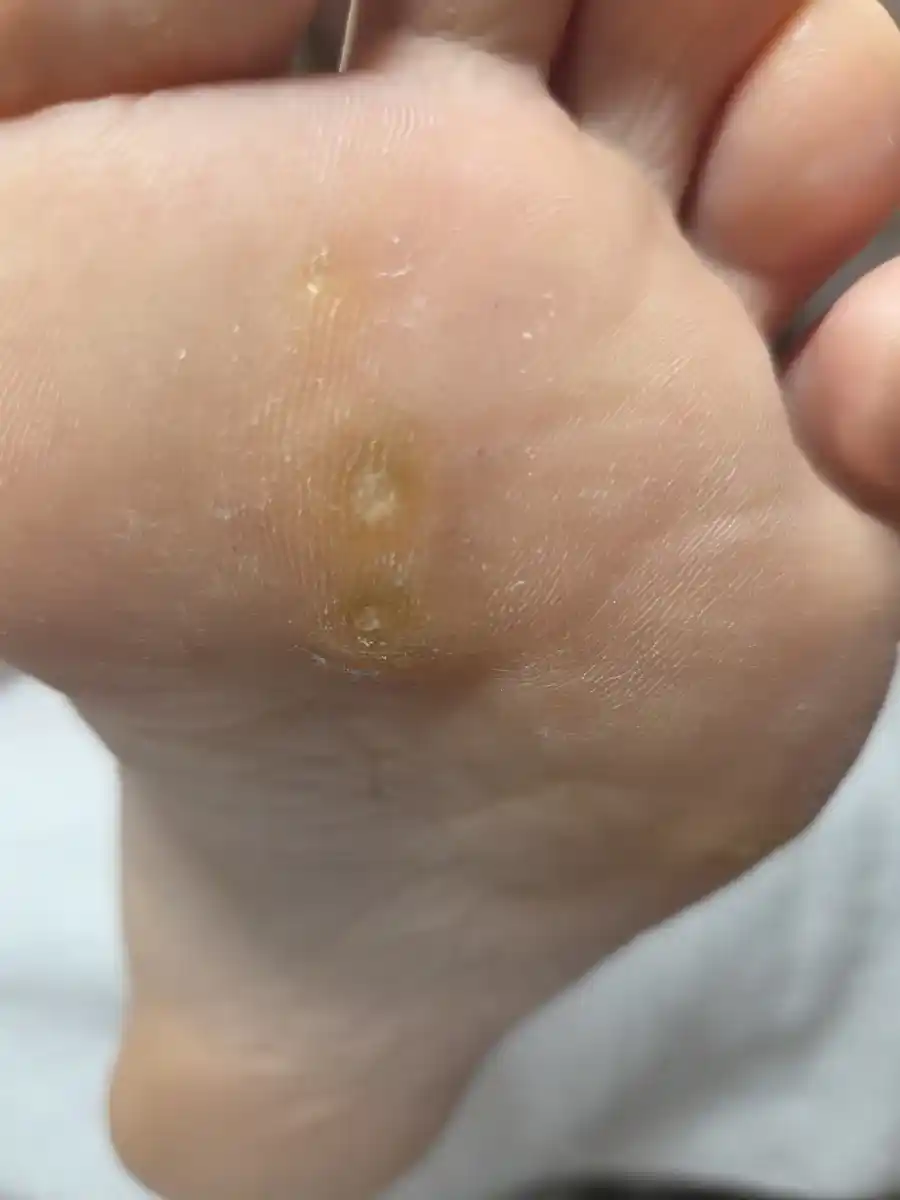
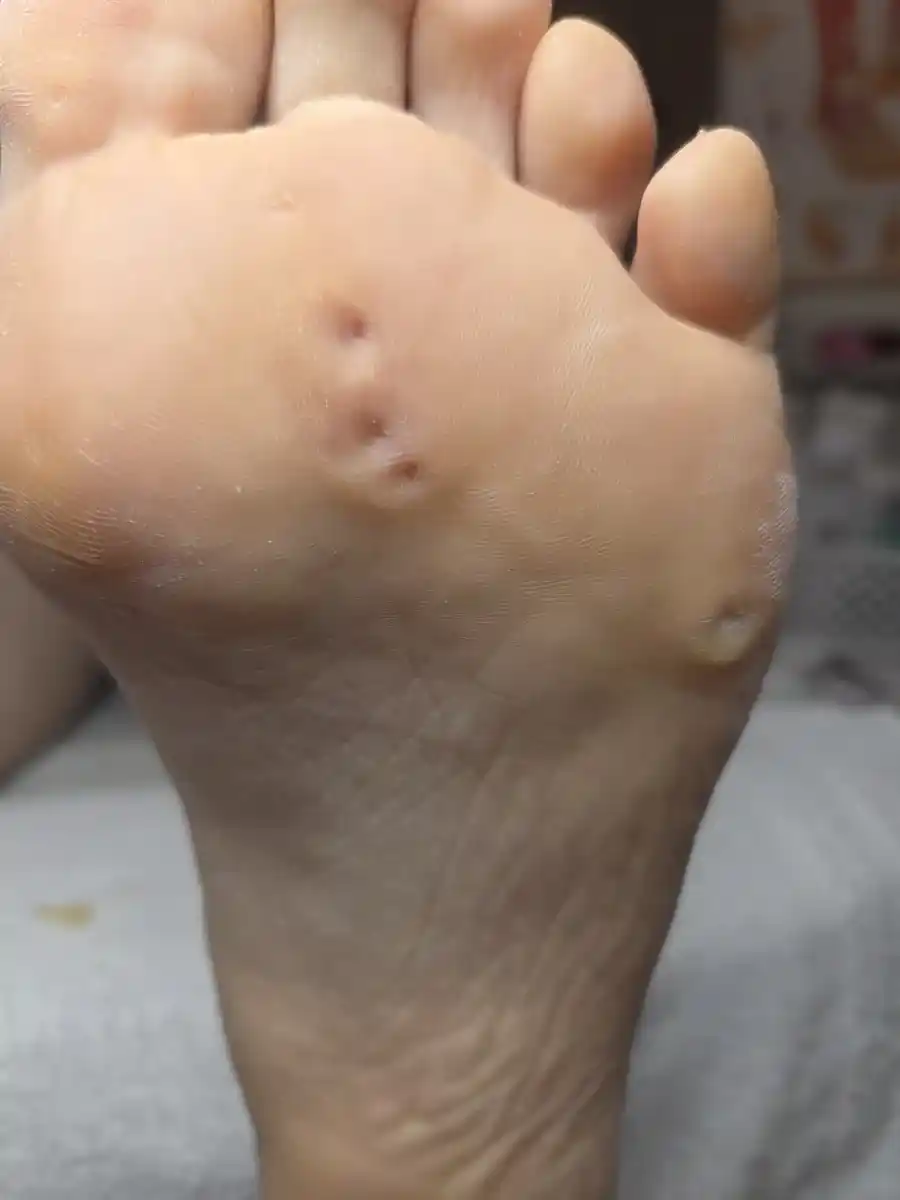
Core corns on the ball of the foot
The callus cap and each core lifted out with fine podology e-file bits — no blades, no acids. Only small, clean pits remain where the cores were.
Professional callus care using e-file technique rather than blades. Nothing is cut, so there is no risk of nicking healthy skin and no soaking that makes tissue rubbery and hard to read. Results typically hold for four to eight weeks.

Every pair is one client of Yulia, before and after the visit. Swipe to see more.
The callus cap and each core lifted out with fine podology e-file bits — no blades, no acids. Only small, clean pits remain where the cores were.
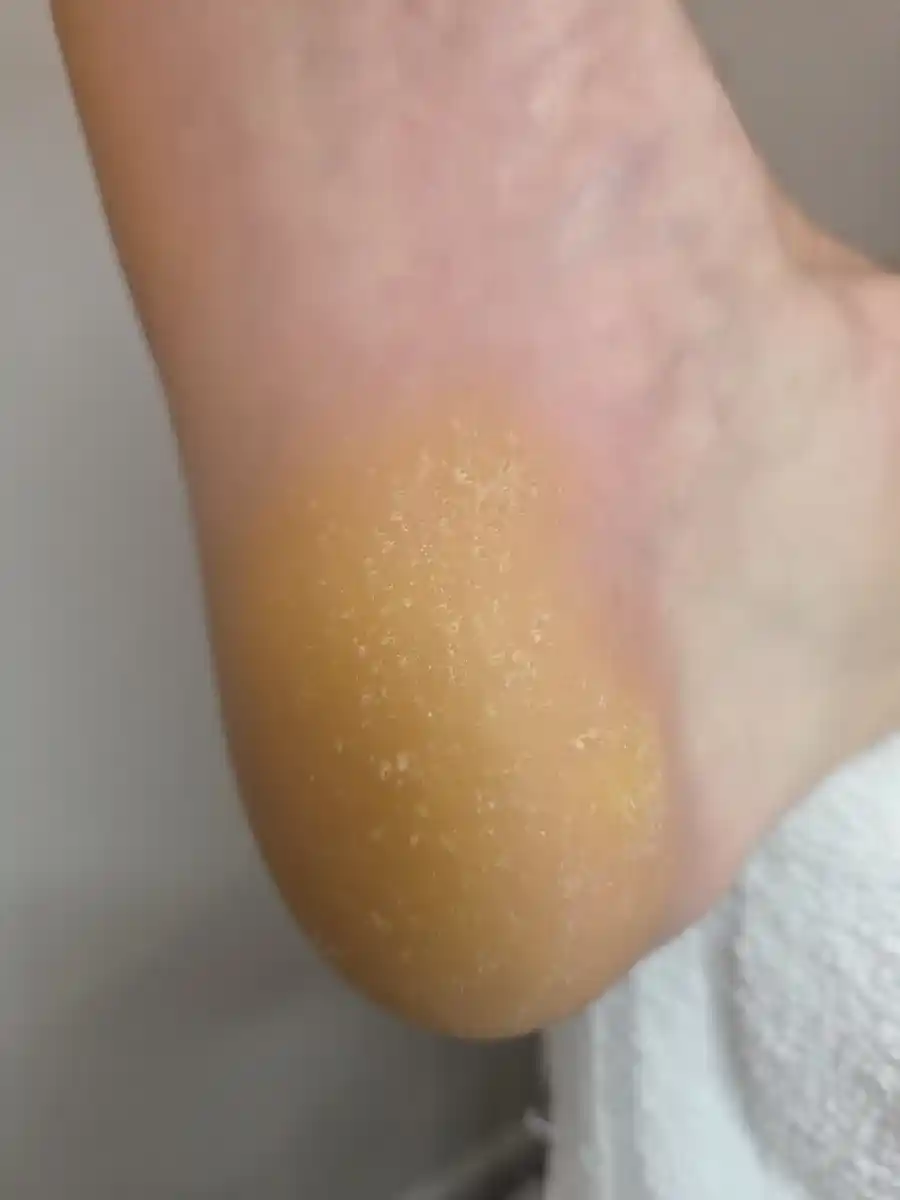
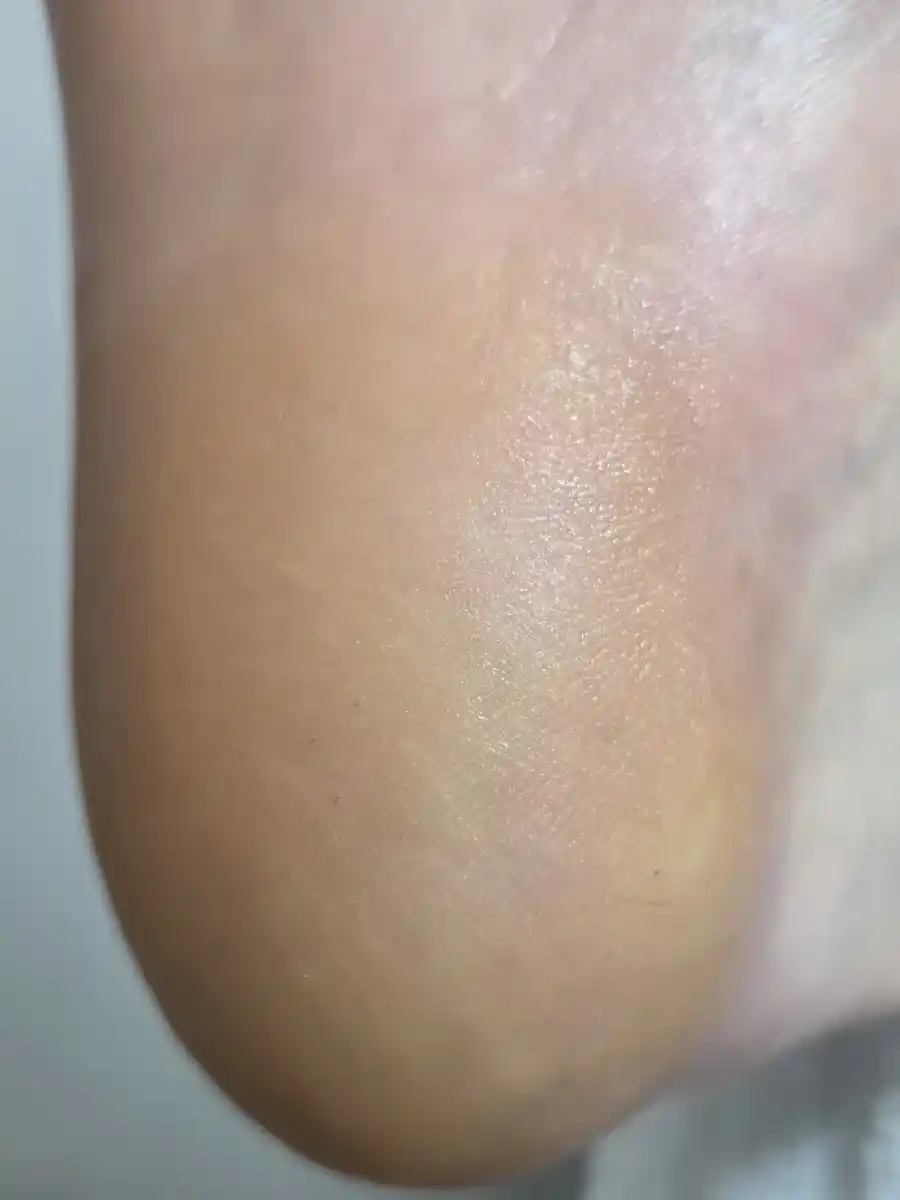
The hard layer reduced evenly with a podology e-file down to smooth, natural skin — dry technique, no soaking, no razor.
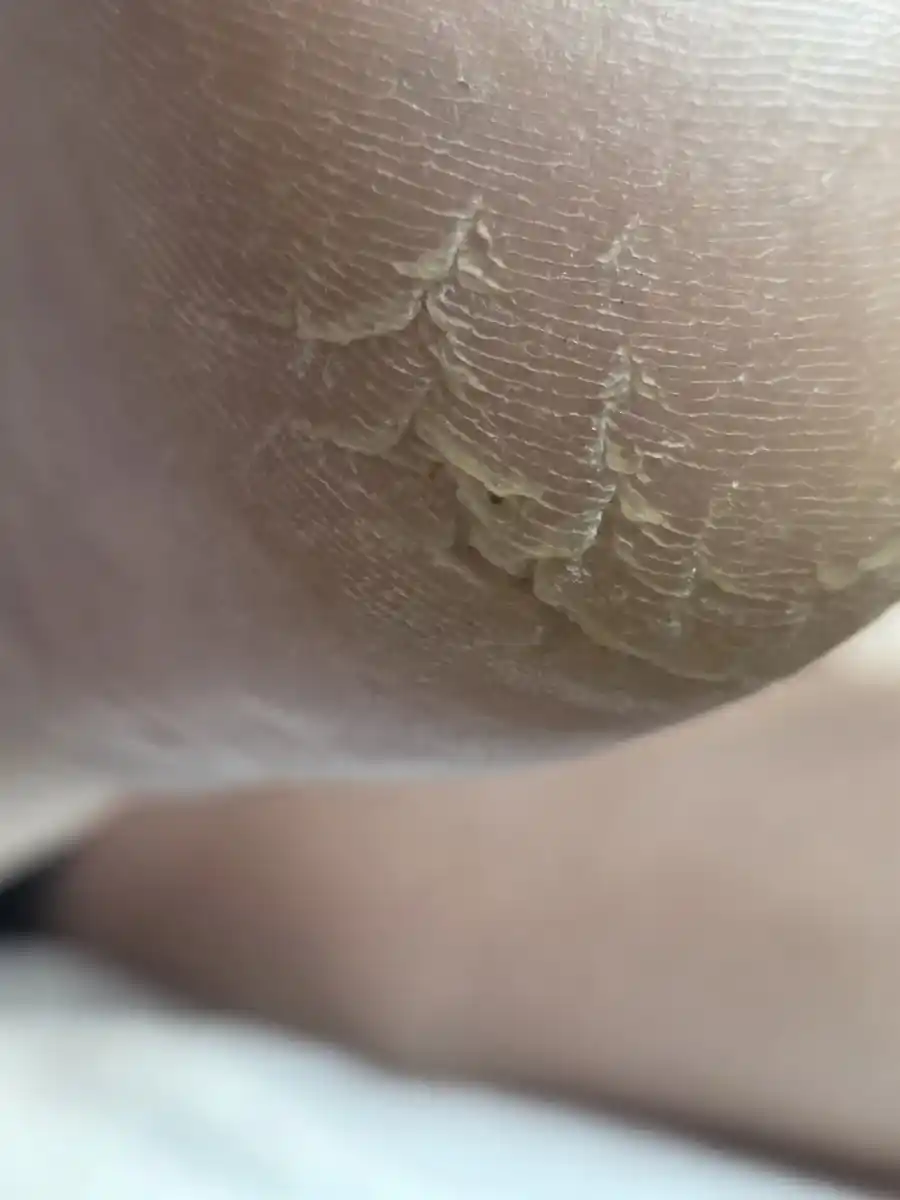
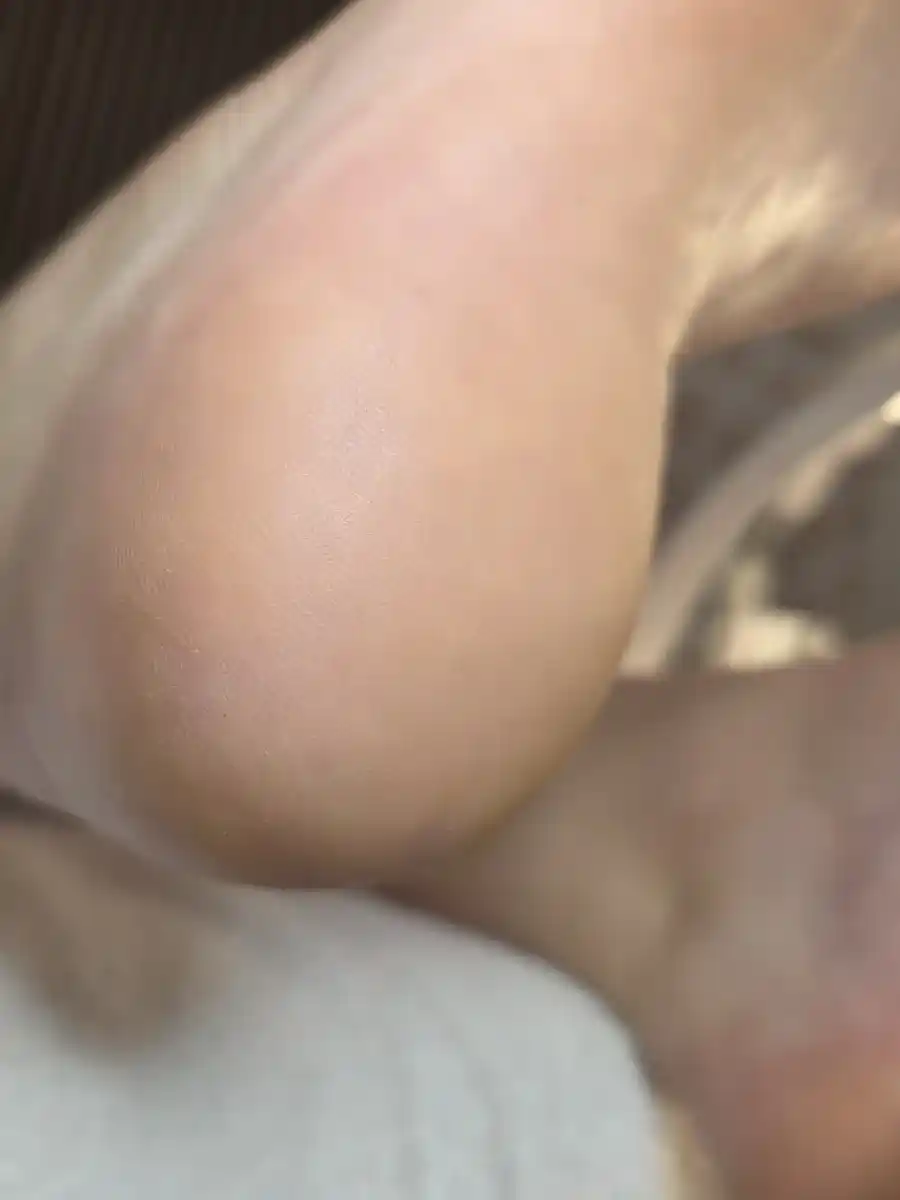
The hard rims around the cracks and the dry layers smoothed away with e-file bits, leaving an even, soft heel.
Cosmetic results · photos published with clients’ permission.
Not sure this is the right care? Book a $50 consultation — Yulia checks your feet and tells you exactly what they need.
Yulia checks where each callus sits and asks about your shoes and how long you stand. Where a callus forms tells you what is pressing on it.
A keratolytic gel softens only the dead layer. Your skin stays dry, so the line between dead and healthy tissue stays easy to see.
Precision e-file bits take the callus down gradually. Corn cores are lifted out rather than shaved flat, so walking feels different straight away.
The area is smoothed and moisturized, and you get simple advice to slow the buildup — shoe changes, padding and a home routine.
A callus is your skin protecting itself. Wherever a spot takes repeated pressure or friction — the ball of the foot, the outside of the heel, the side of the big toe — the outer layer thickens. That is why work boots, dress shoes and long shifts on hard floors build calluses so quickly, and why Michigan winters (tight boots, dry indoor heat) make them worse.
It is also why shaving a callus down to pink skin backfires. Cut too deep and the skin rebuilds faster and thicker, and a blade can easily nick living tissue. We take the callus down to a thin, comfortable layer and leave healthy skin alone, which is the main reason results last four to eight weeks instead of one or two.
A callus is a broad, flat patch of hard skin. A corn is smaller and deeper, with a dense core that presses into the skin like a pebble — it is the corn that usually hurts. Both are removed in the same visit. Our guide on corns vs calluses explains how to tell them apart.
No. Only dead, hardened skin is removed, and it has no nerve endings. Most people feel relief as soon as the pressure from a thick callus or corn is gone.
Most clients come back every four to eight weeks. How quickly a callus returns depends on your shoes, your job and how much you stand.
The hard core is lifted out, which is what relieves the pain. If the pressure that caused it continues, a corn can form again — that is why we look at your shoes and give you a prevention plan.
We use no blades and no soaking, which removes the main risks of a salon pedicure. We do ask for your physician’s clearance before the first visit, and we never work on open wounds.
Callus Removal (from $80, 30 min) focuses on hard skin and corns. Healthy Nails Care ($150–200, 60 min) is the full program: nails, calluses, corns and heels in one visit.
from $80 · 30 min. No payment online — you pay in studio after your care.
2891 E Maple Rd, Troy, MI 48083 · Tue/Thu/Sat 9am–8pm · Mon/Wed/Fri 4pm–8pm