
What Is a Medical Pedicure? A Plain-English Guide
A medical pedicure (also called a medi-pedicure) is a waterless, hygiene-focused pedicure that deals with the things that actually make feet uncomfortable: thick nails, calluses, corns, cracked heels and ingrown edges. Here is what happens, who it helps, and how to tell a good provider from a salon with a new name.
Updated October 2026
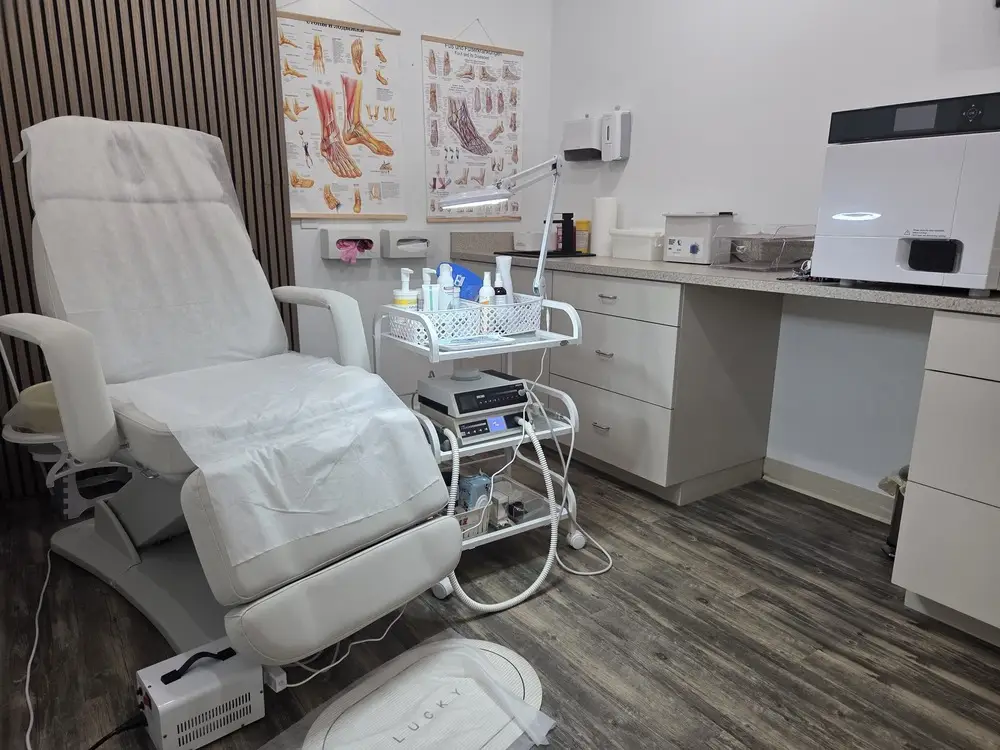
A medical pedicure is a cosmetic foot care service performed on dry skin with sterilized instruments and an electric file, instead of soaking feet in a basin and using blades. It focuses on problem areas — thick or discolored nails, calluses, corns, cracked heels and curved nail edges — rather than polish. It is not a medical treatment and does not replace a podiatrist, but it is a safer and longer-lasting option than a salon pedicure for most problem feet.
Medical pedicure vs regular pedicure
| Regular salon pedicure | Medical pedicure | |
|---|---|---|
| Foot soak | Yes, in a shared basin | No — dry (waterless) technique |
| Hard skin | Blade, grater or pumice on softened skin | E-file on dry skin, layer by layer |
| Instruments | Disinfected (varies) | Autoclave-sterilized, opened from sealed pouches |
| Main goal | Appearance and polish | Comfort, hygiene, problem nails and skin |
| Typical length | 30–45 minutes | 45–60+ minutes |
| Who it suits | Healthy feet that need tidying | Thick nails, calluses, corns, cracked heels, diabetes (with clearance), seniors |
What happens during a medical pedicure
Assessment
The specialist looks at nails, skin and pressure points and asks about health conditions such as diabetes, circulation problems or blood thinners.
Antiseptic cleanse
Feet are disinfected without soaking. Calluses and heels may get a softening gel.
Nail work
Thick nails are thinned with an e-file or spray device, shortened, shaped and cleaned along the folds. Ingrown edges are eased.
Skin work and finish
Calluses, corns and cracked heels are reduced with sterile bits, then the skin is moisturized and you get a home routine.
Who benefits most
- People whose toenails have become too thick to cut at home.
- Anyone with painful corns or calluses, or heels that crack every winter.
- Clients with diabetes or slower healing, with their doctor’s clearance.
- Older adults who can no longer reach or see their feet well.
- People with a curved or ingrown nail who want a non-surgical option such as toenail braces.
What a medical pedicure is not
Despite the name, a medical pedicure is a cosmetic service. In the United States it is performed by nail technicians with specialized (often European podology) training, not by doctors. A good specialist will not diagnose fungus, prescribe medication, or work on open wounds and infections — and will tell you when to see a podiatrist instead. Our guide podiatrist or medical pedicure explains where the line sits.
How much does a medical pedicure cost?
Prices vary by studio and by how much work your feet need. At MediPedi in Troy, a full medical pedicure (Healthy Nails Care) is $150–200 for about an hour; single-area services start at $70 for cracked heels and $80 for calluses; care for thick or fungal-looking nails is $130–350. A $50 consultation gives you an exact price before anything starts.
How often should you get one?
Every four to eight weeks for most people. Heavy buildup may need two or three closer visits at first; after that, regular maintenance stops nails and calluses getting back to the painful stage.
How to choose a safe provider
- Instruments come out of sealed sterilization pouches opened in front of you — ask whether they use an autoclave.
- No foot basin and no blades (credo blades or callus shavers).
- Files and buffers are single-use or sterilizable.
- They ask about diabetes, circulation and medications before starting.
- They are honest about what is cosmetic and when you need a doctor.
Frequently asked questions
Is a medical pedicure done by a doctor?
No. It is a cosmetic service performed by a nail technician with specialized training. For diagnosis, prescriptions or wound care you need a podiatrist or physician.
Does a medical pedicure hurt?
No. Only dead skin and nail material are removed, and neither has nerve endings. Most people feel relief afterwards.
Is a medical pedicure worth it?
If you have thick nails, calluses, corns or cracked heels, usually yes: results last four to eight weeks instead of one or two, and there is no footbath or blade risk.
Can I get polish after a medical pedicure?
Many people skip polish on problem nails so they can breathe and be monitored. Ask your specialist what suits your nails.
Where can I get a medical pedicure near Troy, MI?
MediPedi is at 2891 E Maple Rd, Troy, MI 48083, serving Royal Oak, Birmingham, Rochester Hills, Sterling Heights, Bloomfield Hills and Detroit.
Related care & guides
This guide is general information written by a cosmetic foot care specialist. It is not medical advice and does not replace a diagnosis from a physician or podiatrist.
Want an expert look at your feet?
A $50 consultation gives you an honest assessment, a written plan and exact prices.
2891 E Maple Rd, Troy, MI 48083 · Tue/Thu/Sat 9am–8pm · Mon/Wed/Fri 4pm–8pm