
Yellow Toenails: 8 Common Causes and What Actually Helps
Yellow toenails are one of the most common reasons people book a visit with us — and the cause is not always fungus. Here are the eight reasons we see most often, how to tell them apart, and what each one needs.

Updated October 2026
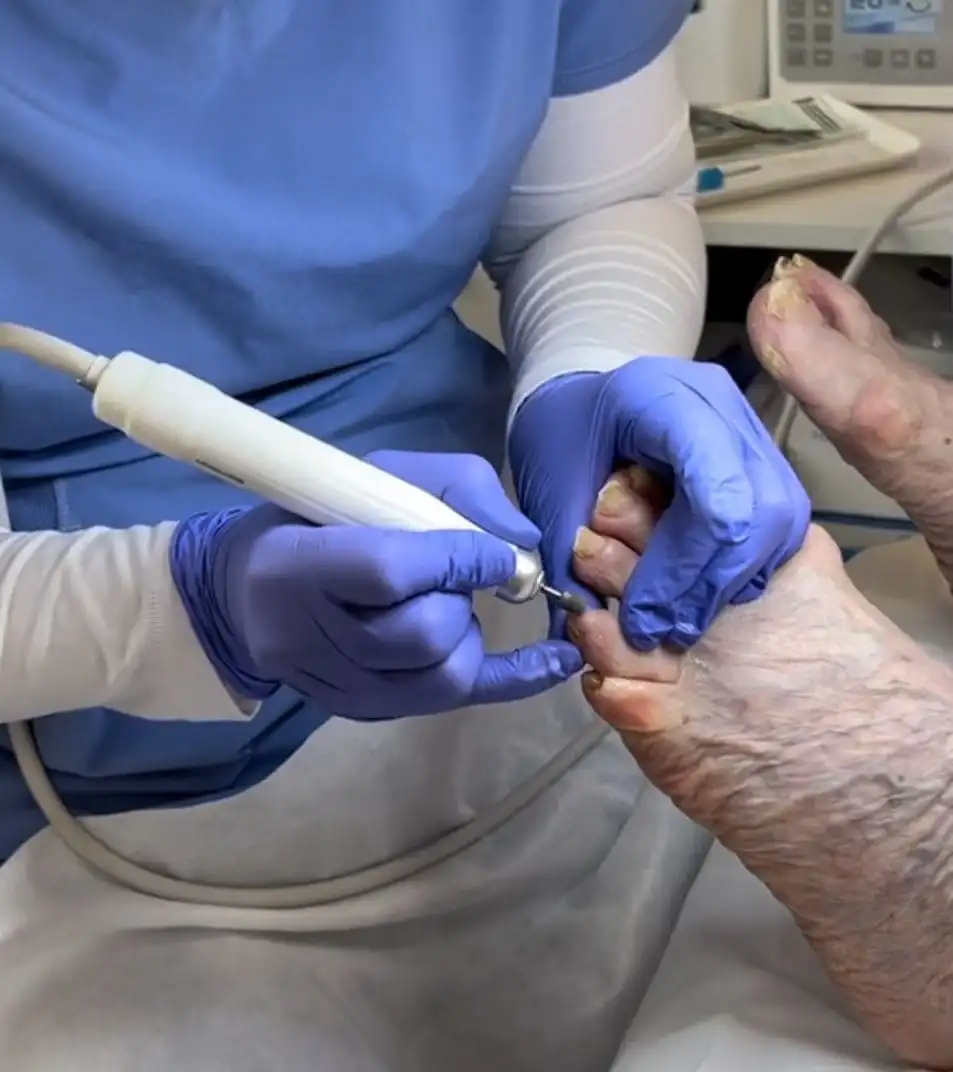
The most common causes of yellow toenails are nail polish staining, fungal infection, aging, repeated pressure or injury and psoriasis. Polish stains are flat and grow out; fungus usually brings thickening, crumbling and debris under the nail. If the nail is painful, the skin is red or swollen, or you see a dark streak, see a doctor.
1. Nail polish staining
Dark reds, oranges and some gel products can leave a yellow-orange stain, especially without a base coat. The nail stays smooth and normal thickness, and the stain grows out with the nail. What helps: a few weeks without polish, and a base coat in future.
2. Fungal infection (onychomycosis)
Usually starts at the tip or sides of the nail as a yellow, white or brown patch and spreads back. Over time the nail thickens, crumbles at the edge, collects debris underneath and may lift from the nail bed. It often affects more than one nail and may come with athlete’s foot. What helps: a lab test and treatment plan from a podiatrist or dermatologist; regular cosmetic nail reduction makes the nail neater and helps topical products reach the bed.
3. Aging
Nails grow more slowly with age and become thicker, duller and more yellow. Several nails change gradually and evenly. What helps: regular thinning and shaping, good moisture, and well-fitting shoes.
4. Pressure and repeated injury
Tight shoes, steel-toe boots, running downhill and kicking sports all knock the nail against the shoe thousands of times. The nail thickens and discolors, often only on the big toe or the longest toe. What helps: roomier shoes, nails kept short, and professional thinning. Read more in our guide to thick toenails.
5. Psoriasis
Nail psoriasis can cause yellow-brown “oil drop” patches, tiny pits, thickening and a nail that lifts at the tip. It often affects fingernails too, and usually (not always) comes with psoriasis on the skin. What helps: care from a dermatologist; gentle cosmetic thinning for comfort.
6. Smoking and staining from products
Nicotine and some topical products can tint nails yellow, more often on fingernails than toes. The nail surface is otherwise normal.
7. Health conditions and medications
Diabetes, circulation problems and some medications can change nail color and thickness. If discoloration appeared alongside other symptoms or a new medication, mention it to your doctor.
8. Yellow nail syndrome (rare)
A rare condition in which nails turn yellow, thicken and nearly stop growing, together with swelling (lymphedema) and breathing or sinus problems. It needs a medical evaluation.
How to tell the causes apart
| What you see | Most likely | What to do |
|---|---|---|
| Flat yellow-orange stain, normal thickness | Polish staining | Pause polish, use a base coat |
| Thick, crumbly edge, debris under nail, spreading | Fungus | Doctor for diagnosis; cosmetic reduction for comfort |
| Gradual change across several nails, no debris | Aging | Regular thinning and moisture |
| One big toe, thick, after sport or tight shoes | Pressure / injury | Better shoes, professional thinning |
| Pits, oil-drop spots, lifting, also fingernails | Psoriasis | Dermatologist; gentle cosmetic care |
What a medical pedicure can do for yellow nails
We cannot diagnose or cure the cause, but we can make yellow, thickened nails look and feel much better: thinning the nail painlessly, clearing debris, smoothing the surface and shaping the edge. Clients who are being treated by their doctor often combine the two. See Fungal & Thickened Nail Care or start with a $50 consultation.
Keeping nails clear at home
- Give nails a polish break every few weeks and always use a base coat.
- Dry between the toes after showering; change socks daily.
- Rotate shoes so they dry out, and wear sandals in gym showers.
- Don’t share clippers; disinfect your own tools.
Frequently asked questions
Are yellow toenails always fungus?
No. Polish staining, aging, pressure from shoes and psoriasis are all common causes. Fungus usually comes with thickening, crumbling and debris under the nail.
Can yellow toenails go back to normal?
Stains grow out within a few months. For fungus, aging or injury, the nail that is already discolored usually has to grow out, which takes 12–18 months for a big toenail. Cosmetic thinning improves the look in the meantime.
Does hydrogen peroxide or baking soda whiten yellow toenails?
They may lighten surface stains from polish. They will not fix fungus, thickening or discoloration from inside the nail.
When should I worry about a yellow toenail?
If there is pain, redness, swelling or pus, a dark streak, the nail lifts and bleeds, or you have diabetes — see a doctor.
Can you help with yellow toenails in Troy, MI?
Yes. MediPedi offers cosmetic care for thick, discolored nails at 2891 E Maple Rd, Troy. See Fungal & Thickened Nail Care.
Related care & guides
This guide is general information written by a cosmetic foot care specialist. It is not medical advice and does not replace a diagnosis from a physician or podiatrist.
Want an expert look at your feet?
A $50 consultation gives you an honest assessment, a written plan and exact prices.
2891 E Maple Rd, Troy, MI 48083 · Tue/Thu/Sat 9am–8pm · Mon/Wed/Fri 4pm–8pm