
Thick Toenails: Why They Happen and How to Thin Them Safely
Thick toenails are hard to cut, press painfully inside shoes and often look discolored. The good news: in most cases they can be thinned safely and painlessly. Here is what causes them and what you can do.
Updated October 2026
Toenails thicken because of fungal infection, aging, repeated pressure or injury, psoriasis or poor circulation. Clippers often crack thick nails or slip into the skin, so the safest option is professional thinning with an e-file or spray device — it is painless because the nail plate has no nerves. See a doctor first if the toe is painful, red, swollen or you have diabetes.
Why toenails get thick
Fungal infection
The most common cause. The nail thickens, yellows, crumbles at the edge and collects debris underneath. Read about other signs in our guide to yellow toenails.
Aging
As nails grow more slowly, the nail cells pile up and the plate becomes thicker and harder. Most people over 60 notice it on at least the big toes.
Pressure and injury
One hard knock (a dropped weight, a stubbed toe) or thousands of small ones (running, hiking, tight or steel-toe shoes) can damage the nail root so the nail grows back thicker. This often affects one nail more than the others.
Psoriasis and other skin conditions
Nail psoriasis causes thickening, pitting and lifting. A dermatologist manages the condition; cosmetic thinning keeps nails comfortable.
Circulation and other health factors
Reduced blood flow to the feet, diabetes and some other conditions can slow nail growth and thicken nails. These deserve a conversation with your doctor.
Why cutting thick toenails at home is risky
- Clippers can crack or split a thick nail, leaving sharp edges that catch and tear.
- It is easy to cut into the skin at the corners — a bigger problem with diabetes or blood thinners.
- Many people simply can’t reach or see their feet well enough to cut safely.
- Digging out the corners encourages ingrown nails.
How professional thinning works
Assessment
How thick the nail is, whether it is lifting, and whether anything needs a doctor first.
Painless reduction
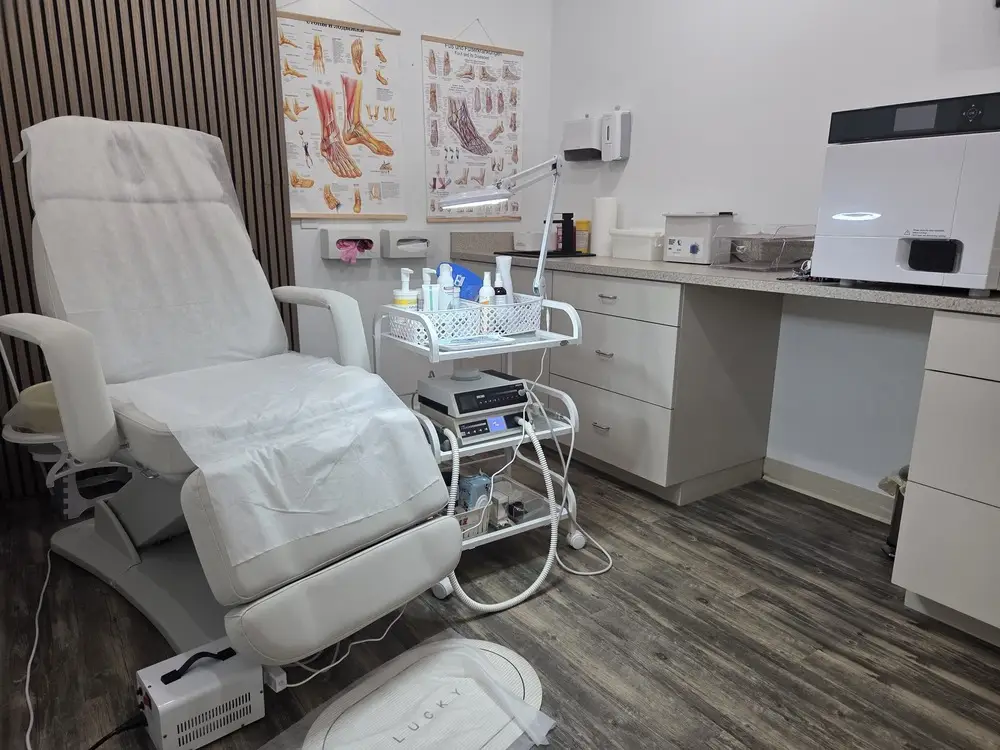
An e-file or cooling spray device thins the nail layer by layer. The nail plate has no nerves, so it does not hurt.
Shaping and cleaning
The nail is shortened, the edges smoothed and debris cleared from under the free edge.
Maintenance
Nails are thinned again every six to eight weeks so they never get back to the painful stage.
At MediPedi this is done as part of Fungal & Thickened Nail Care ($130–350) or the full Healthy Nails Care ($150–200).
Caring for thick nails between visits
- Trim after a shower when nails are softer, straight across, with sharp nippers — not clippers.
- Smooth edges with a file rather than cutting deep into the corners.
- Choose shoes with a deep, roomy toe box.
- Keep feet dry and change socks daily.
Frequently asked questions
Can thick toenails become thin again?
The nail that is already thick usually stays that way, but regular professional thinning keeps it flat and comfortable. If the cause is treated (for example, fungus or tight shoes), new nail may grow in thinner.
Does thinning a toenail hurt?
No. The nail plate has no nerve endings, and modern devices work without heat. Most people find it relaxing.
How often should thick toenails be thinned?
Every six to eight weeks for most people.
Should I soak thick toenails before cutting them?
At home, cutting after a shower helps. In our studio we work on dry nails because it lets us see the nail structure clearly and avoids a shared basin.
Who thins thick toenails near Troy, MI?
MediPedi at 2891 E Maple Rd, Troy, offers painless thinning of thick toenails for clients across Metro Detroit.
Related care & guides
This guide is general information written by a cosmetic foot care specialist. It is not medical advice and does not replace a diagnosis from a physician or podiatrist.
Want an expert look at your feet?
A $50 consultation gives you an honest assessment, a written plan and exact prices.
2891 E Maple Rd, Troy, MI 48083 · Tue/Thu/Sat 9am–8pm · Mon/Wed/Fri 4pm–8pm