
Corns vs Calluses: How to Tell Them Apart and What Actually Helps
Corns and calluses are both thickened skin caused by pressure and friction, but they look different, hurt differently and need slightly different care. Here is how to tell which one you have.
Updated October 2026
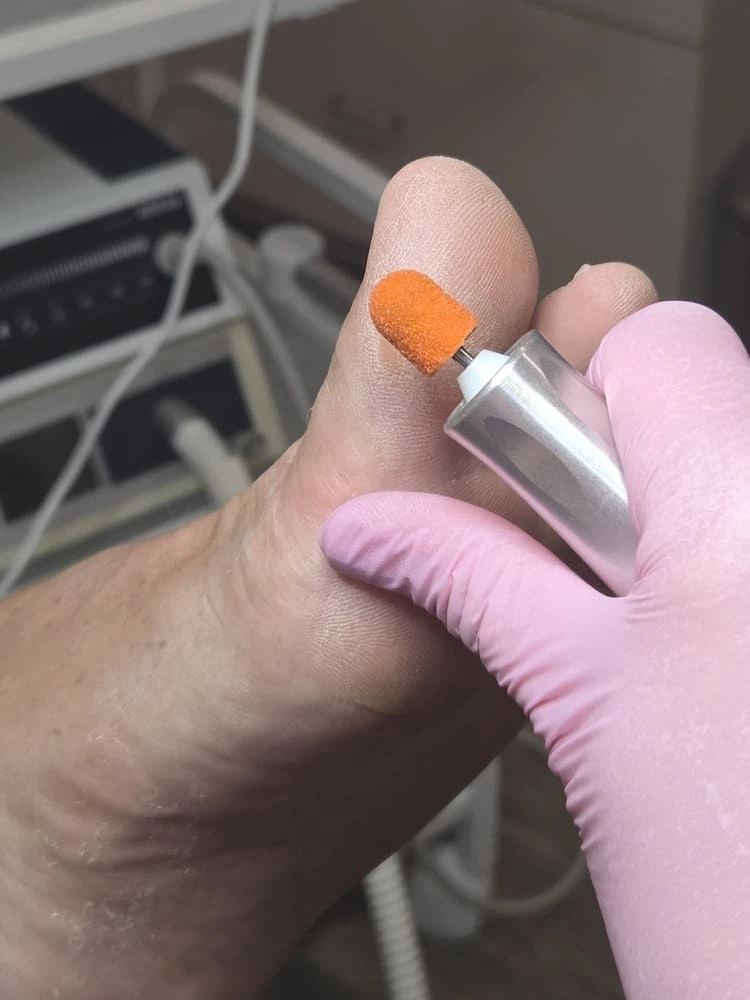
A callus is a broad, flat patch of hard skin, usually on the sole or heel, and is rarely painful. A corn is small, round and deep, with a hard core that presses into the skin — usually on the tops or sides of the toes — and it often hurts when pressed. Both come from pressure and friction; both are removed safely with an e-file rather than a blade.
The differences at a glance
| Callus | Corn | |
|---|---|---|
| Shape | Broad, flat, irregular | Small, round, well-defined |
| Depth | Surface thickening | Cone-shaped core pointing inward |
| Where | Ball of the foot, heels, side of big toe | Tops and sides of toes, between toes |
| Pain | Usually painless or a dull burn | Sharp pain when pressed |
| Cause | Spread-out pressure from standing and walking | Concentrated pressure on a bony spot |
Types of corns
- Hard corns — the classic kind, on the top of a toe joint or the outside of the little toe where the shoe rubs.
- Soft corns — whitish and rubbery, between the toes (often the 4th and 5th), kept soft by moisture.
- Seed corns — tiny, hard dots on the sole, often in clusters.
Why they form
Skin thickens to protect itself wherever it takes repeated pressure or friction. The usual culprits are shoes that are too narrow, too short or too high; thin soles on hard floors; long hours standing; and foot shape — bunions, hammertoes or prominent joints create pressure points. Remove the callus without changing the pressure and it comes back.
What not to do at home
- No razor blades or callus shavers. It is very easy to cut living skin.
- Be careful with medicated corn pads. Most contain salicylic acid, which can burn the healthy skin around the corn. People with diabetes or poor circulation should not use them.
- Don’t dig out a corn. The core sits deep; digging causes wounds.
What helps
- A urea cream (10–25%) on calluses most evenings, and gentle filing on dry skin once a week.
- Silicone toe sleeves or separators to take pressure off corns on and between toes.
- Shoes with a wider, deeper toe box and cushioned soles.
- Professional removal every four to eight weeks if they keep coming back — see Callus & Corn Removal (from $80) and Hyperkeratosis Removal ($80).
How professional removal works
At MediPedi the skin is softened with a gel (no soaking) and reduced layer by layer with an e-file. Calluses are taken down to a comfortable thin layer; corn cores are lifted out rather than shaved flat, which is why walking feels different straight away. It is painless and there is no bleeding risk.
Frequently asked questions
Is a corn worse than a callus?
Corns tend to hurt more because the core presses into deeper skin. Calluses are usually less painful but can crack if they get very thick.
Do corns have roots?
Not literal roots. A corn has a dense, cone-shaped core that points inward, which is why it feels like a pebble. Lifting out the core relieves the pain.
Will a corn go away on its own?
It may slowly improve if the pressure stops completely, for example with different shoes. Most need removing to stop the pain.
Can I remove a callus myself?
Gentle filing on dry skin and a urea cream are fine. Avoid blades, shavers and acid pads, especially if you have diabetes.
Where can I get corns and calluses removed in Troy, MI?
MediPedi at 2891 E Maple Rd, Troy, removes corns and calluses without blades or soaking. See Callus & Corn Removal.
Related care & guides
This guide is general information written by a cosmetic foot care specialist. It is not medical advice and does not replace a diagnosis from a physician or podiatrist.
Want an expert look at your feet?
A $50 consultation gives you an honest assessment, a written plan and exact prices.
2891 E Maple Rd, Troy, MI 48083 · Tue/Thu/Sat 9am–8pm · Mon/Wed/Fri 4pm–8pm